

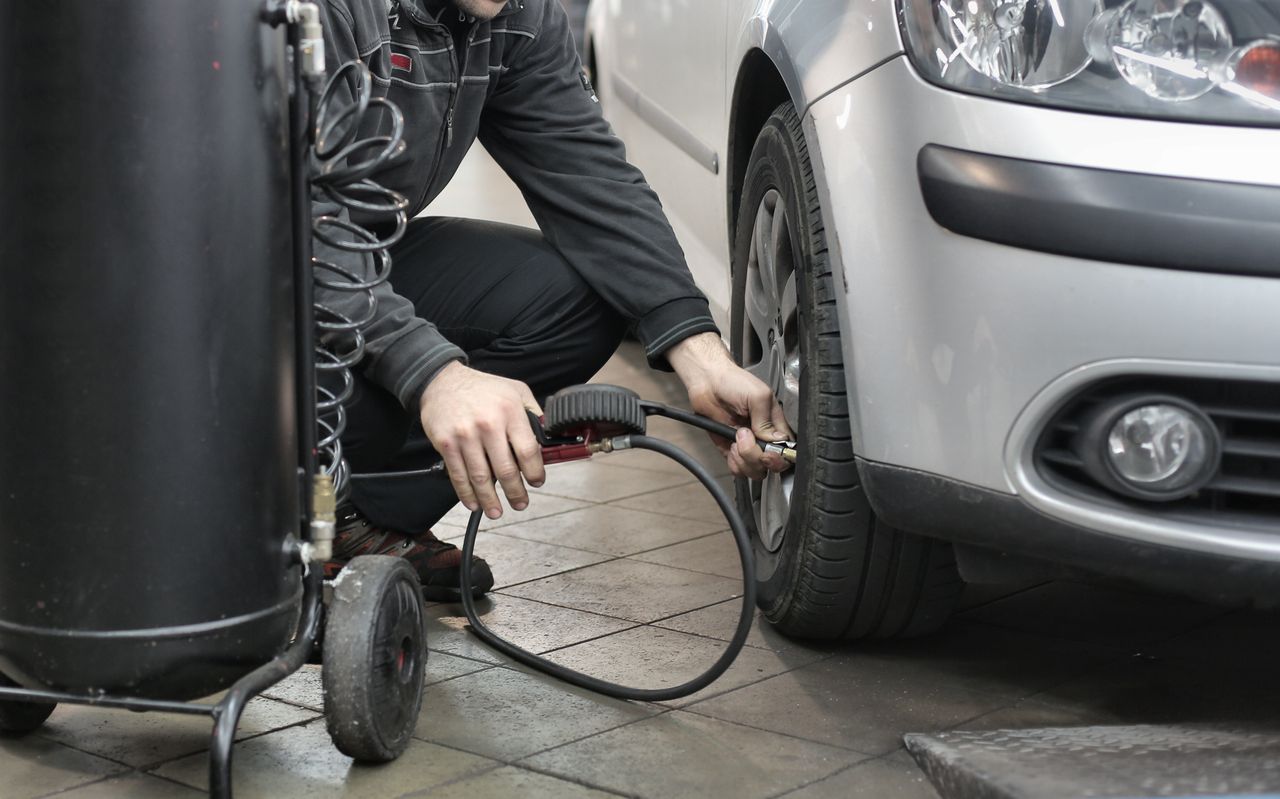
Choosing an Air Compressor for Tyre Inflation and Garage Use
Choosing the right compressor for tyre inflation and general garage work is less about buying the biggest machine available and more about matching the equipment to the jobs you actually expect to perform. A compressor that is ideal for occasional tyre inflation may be very different from one needed for air tools, cleaning, or frequent automotive repairs. Understanding pressure, airflow, tank capacity, and duty requirements makes the selection process much easier.
For home garages, air compressors can provide a convenient source of compressed air for maintaining vehicle tyres and powering a range of pneumatic equipment. However, specifications can be confusing, particularly when comparing tank sizes, litres per minute, cubic feet per minute, and maximum pressure. A machine with a large tank is not automatically the best choice, just as a high maximum pressure does not necessarily mean it will deliver enough airflow for demanding tools.
Safety and reliability should also influence the decision. Correct tyre pressure is important for vehicle handling, braking performance, tyre wear, and fuel efficiency, while poorly maintained compressed-air equipment can create unnecessary risks. Choosing a suitable compressor and using it according to the manufacturer’s instructions can make routine garage tasks more practical and predictable.
Start With the Jobs You Need to Perform
The first step is to identify how you intend to use the compressor. Tyre inflation requires relatively little continuous airflow compared with many pneumatic tools, so a modest unit can often handle occasional vehicle maintenance. If you also intend to operate an impact wrench, air ratchet, blow gun, tyre inflator, or other pneumatic equipment, airflow requirements become much more important.
Consider whether the compressor will be used for short tasks or extended periods. Inflating four vehicle tyres is generally an intermittent job. An air tool used continuously, however, can consume compressed air much faster than the pump can replenish it.
Typical garage applications may include:
- Inflating car, motorcycle, trailer, bicycle, or light commercial vehicle tyres
- Checking and adjusting tyre pressure
- Blowing dust and debris from suitable workshop surfaces
- Operating selected pneumatic hand tools
- Using an air blow gun for appropriate cleaning tasks
- Supplying air to small automotive equipment
- Occasional DIY and maintenance projects
Thinking about future requirements is worthwhile. Buying a machine that only meets today’s needs may become frustrating if you later add pneumatic tools.
Understand Pressure and Airflow
Two of the most important compressor specifications are pressure and airflow. They describe different aspects of performance and should not be treated as interchangeable.
Pressure is normally expressed in bar, pounds per square inch (PSI), or both. It indicates how much pressure the compressor can produce or store. Tyre inflation equipment usually operates within a relatively modest pressure range, depending on the vehicle and tyre. The correct inflation pressure should always come from the vehicle manufacturer’s recommendations, tyre information, or another reliable specification rather than from the compressor’s maximum pressure rating.
Airflow is commonly listed as litres per minute (L/min) or cubic feet per minute (CFM). It indicates how much air the compressor can deliver over time. This becomes particularly important when powering pneumatic tools because different tools have different air consumption requirements.
A compressor may therefore have a high maximum pressure while still being unsuitable for a tool that requires substantial continuous airflow. When comparing models, look for the delivered or effective airflow specification where available, rather than relying solely on the pump’s theoretical displacement figure.
Choose a Suitable Tank Size
Tank capacity is another specification that can make compressor shopping confusing. It is usually measured in litres and represents the amount of compressed air the receiver can store.
For occasional tyre inflation, a small receiver can be perfectly practical. The compressor can build pressure in the tank, and that stored air can then be used through an inflator. A larger tank provides a greater reserve of compressed air and can reduce how frequently the motor needs to start during intermittent tasks.
For broader garage applications, a medium-sized receiver may provide a useful balance between portability and stored capacity. Larger tanks can be beneficial for pneumatic tools and repeated tasks, but they also tend to increase the physical size and weight of the compressor.
Tank size should therefore be considered alongside pump performance. A large receiver paired with inadequate airflow may provide a useful initial reserve but still struggle when a tool is operated continuously.
Consider How Often the Compressor Will Run
Duty cycle is particularly relevant when a compressor will be used regularly. It refers to how long the machine can operate within a given period before it needs to cool down, although the exact rating system can vary between manufacturers.
For occasional tyre inflation, duty requirements are generally less demanding. You might use the compressor for a few minutes before switching it off. Frequent automotive work is different. Repeated operation of pneumatic tools can place considerably more demand on the motor, pump, and cooling system.
A compressor intended for regular workshop use should therefore be selected with its expected workload in mind. Check the manufacturer’s operating guidance rather than assuming that a machine designed for occasional DIY use is suitable for prolonged professional-style operation.
Allowing appropriate cooling time can also help protect the equipment. If the manufacturer’s instructions specify particular operating or rest periods, those recommendations should take priority.
Think About Portability and Garage Space
A compressor can have excellent specifications and still be inconvenient if it is too large or heavy for your workspace. Portable units are useful when the compressor needs to be moved between a garage, driveway, storage area, or different workstations.
Compact compressors are generally easier to store and transport. Some are designed specifically for light-duty tasks and can be placed on a workbench or moved when necessary. Larger floor-standing units are better suited to permanent workshop installations where capacity and sustained performance are more important than portability.
Before purchasing, measure the intended storage location. Remember to leave enough space around the compressor for ventilation, maintenance, and access to controls.
Noise may also matter in a residential garage. Compressor motors and pumps can be surprisingly loud, so check the manufacturer’s stated noise information if the equipment will be operated near living areas or neighbours.
Match the Compressor to Your Pneumatic Tools
If tyre inflation is only one part of your intended use, examine the requirements of the tools you plan to operate. An impact wrench, for example, can require considerably more airflow than a basic tyre inflator.
Do not select a compressor based solely on the maximum PSI listed on its specification sheet. Instead, compare the tool’s recommended operating pressure and air consumption with the compressor’s delivered airflow.
It is sensible to allow some capacity beyond the minimum requirement. Running a compressor constantly at its limits can be less practical than choosing a unit with enough reserve to cope with normal variations in workload.
Some tools are also used intermittently rather than continuously. In those situations, a receiver tank can help supply short bursts of compressed air while the pump catches up.
Pay Attention to Moisture and Air Quality
Compressed air contains moisture, and that moisture can condense inside the receiver and air lines. This is particularly relevant in garages where temperature changes can contribute to condensation.
Many compressors include a drain valve at the bottom of the receiver. Following the manufacturer’s maintenance instructions for draining accumulated moisture is important because neglected moisture can contribute to corrosion and other equipment problems.
Air quality also matters depending on the application. Basic tyre inflation and many general workshop tasks do not require the same level of air filtration as specialist applications. If a particular tool or piece of equipment specifies a filter, regulator, separator, or lubricator, those requirements should be followed.
A regulator can also help control the pressure supplied to an attached tool. This makes it easier to operate equipment within its recommended range rather than simply exposing every connected device to the compressor’s maximum pressure.
Check the Electrical Requirements
The compressor must be compatible with the electrical supply available in your garage. Check its voltage, power requirements, plug configuration, and any manufacturer recommendations regarding electrical connections.
A compressor with a powerful motor can place a significant load on an electrical circuit, particularly when the motor starts. Avoid assuming that any convenient extension lead or outlet is suitable. The manufacturer’s instructions should be followed, and electrical work should be handled by a suitably qualified person where necessary.
If you are considering a permanently installed workshop compressor, the electrical installation deserves particular attention. Good planning can prevent nuisance tripping and reduce the temptation to use unsuitable connections.
Follow a Sensible Selection Process
Once the specifications and intended applications are clear, the final choice can be narrowed down systematically.
- List your main applications. Decide whether the compressor is primarily for tyre inflation or whether pneumatic tools will also be used.
- Check the pressure requirements. Identify the operating pressure required by your inflator and any tools you intend to connect.
- Compare airflow figures. Look at delivered airflow and compare it with the requirements of the most demanding tool you expect to use.
- Select an appropriate tank. Choose receiver capacity according to how frequently and continuously you expect to work.
- Consider duty requirements. Occasional users have different needs from people performing regular automotive or workshop tasks.
- Check dimensions and noise. Make sure the machine can be stored and operated comfortably in the available space.
- Review maintenance requirements. Check information about oil changes where applicable, air filters, receiver drainage, and other routine servicing.
- Consider accessories. Make sure compatible hoses, fittings, regulators, tyre inflators, and pressure gauges are available for your intended applications.
This process helps prevent a common mistake: choosing a compressor based on one impressive specification while overlooking the characteristics that actually determine whether it will perform well for the intended job.
Choose the Right Tyre Inflation Equipment
The compressor is only one part of a tyre inflation setup. A suitable inflator and accurate pressure gauge are equally important.
Tyre pressure should be checked when the tyres are in the condition recommended by the vehicle manufacturer, commonly before extensive driving has heated them. The specified pressure may differ between front and rear tyres and can also vary according to vehicle load.
Avoid using the maximum pressure printed on a tyre sidewall as a substitute for the vehicle’s recommended inflation pressure. These figures serve different purposes.
A good inflator should connect securely and allow pressure to be monitored clearly. Automatic or preset inflators can be convenient, but users should still understand how the equipment operates and verify pressure appropriately.
Consider Maintenance Before You Buy
A compressor is easier to live with when its maintenance requirements fit your routine. Some models use oil-lubricated pumps, while others use oil-free designs. Each type has its own characteristics and manufacturer-specific maintenance requirements.
Check whether the model requires regular oil inspection or replacement, filter cleaning, belt inspection, receiver draining, or other servicing. Maintenance instructions should be retained and followed throughout the equipment’s service life.
Before each use, it is also sensible to look over hoses, fittings, electrical cables, and visible components for signs of damage. Never use compressed-air equipment with a damaged hose, leaking connection, or other defect that could compromise safe operation.
Make Safety Part of Everyday Garage Use
Compressed air is useful, but it should not be treated casually. Pressurised equipment stores significant energy, and incorrect use can result in injury or equipment damage.
Always follow the compressor and accessory manufacturer’s instructions. Use hoses and fittings that are rated for the pressures involved, keep connections secure, and never modify pressure vessels or safety components.
Compressed air should also be directed carefully. Avoid pointing high-pressure air at people or using it in ways that could drive debris into the eyes or skin. Appropriate eye protection is sensible when compressed air may disturb dust, particles, or debris.
The receiver should never be drilled, welded, modified, or otherwise altered. If a pressure vessel appears damaged or corroded, stop using the equipment and have it assessed according to the manufacturer’s guidance.
Getting the Balance Right for Your Garage
For a household garage where tyre inflation is the primary task, there is usually little benefit in purchasing the largest compressor available. A compact or moderately sized unit with suitable pressure, adequate airflow, a practical receiver, and appropriate accessories may be more convenient and economical.
If the garage will also be used for automotive repairs, the calculation changes. Pneumatic tools can have substantially greater airflow requirements, particularly when used repeatedly. In that situation, compressor performance should be based on the most demanding tool rather than tyre inflation alone.
The best choice is ultimately the one that provides enough performance without becoming unnecessarily difficult to store, operate, maintain, or power. Comparing specifications carefully before purchase can help ensure that the equipment remains useful as your garage projects evolve.
When evaluating air compressors for tyre inflation and garage work, focus on the complete system rather than one headline number. Pressure, delivered airflow, tank capacity, duty cycle, portability, noise, electrical requirements, maintenance, and safety features all contribute to practical performance. With those factors considered together, it becomes much easier to select equipment that suits the garage today while leaving reasonable room for future maintenance and DIY tasks.